KOKorean
 ENEnglish
 JP日本語
 CN中文(简体)
 TW中文(繁體)


Medicines, Supplements, Smoking and Alcohol Before Surgery in Seoul: What to Stop, and When
Not every medicine has to be stopped before surgery: tell your surgeon everything you take, and each item is decided separately. Aspirin, anti-inflammatory painkillers and some supplements such as garlic, ginkgo and ginseng can affect bleeding, so you will be told when to pause them (often about two weeks before surgery for herbal products), and a pooled analysis found fewer wound-healing complications in people who quit smoking more than three to four weeks before surgery. Blood thinners and other daily medicines such as blood pressure tablets can be dangerous to stop on your own, so the prescribing doctor and your surgeon decide together; drinking is linked to more infections and wound problems, so plan a break from alcohol around your operation. If you are planning surgery in Seoul, you can send us your medicine and supplement list with your questions before you plan your visit.
Curious about your own case? Ask us online →
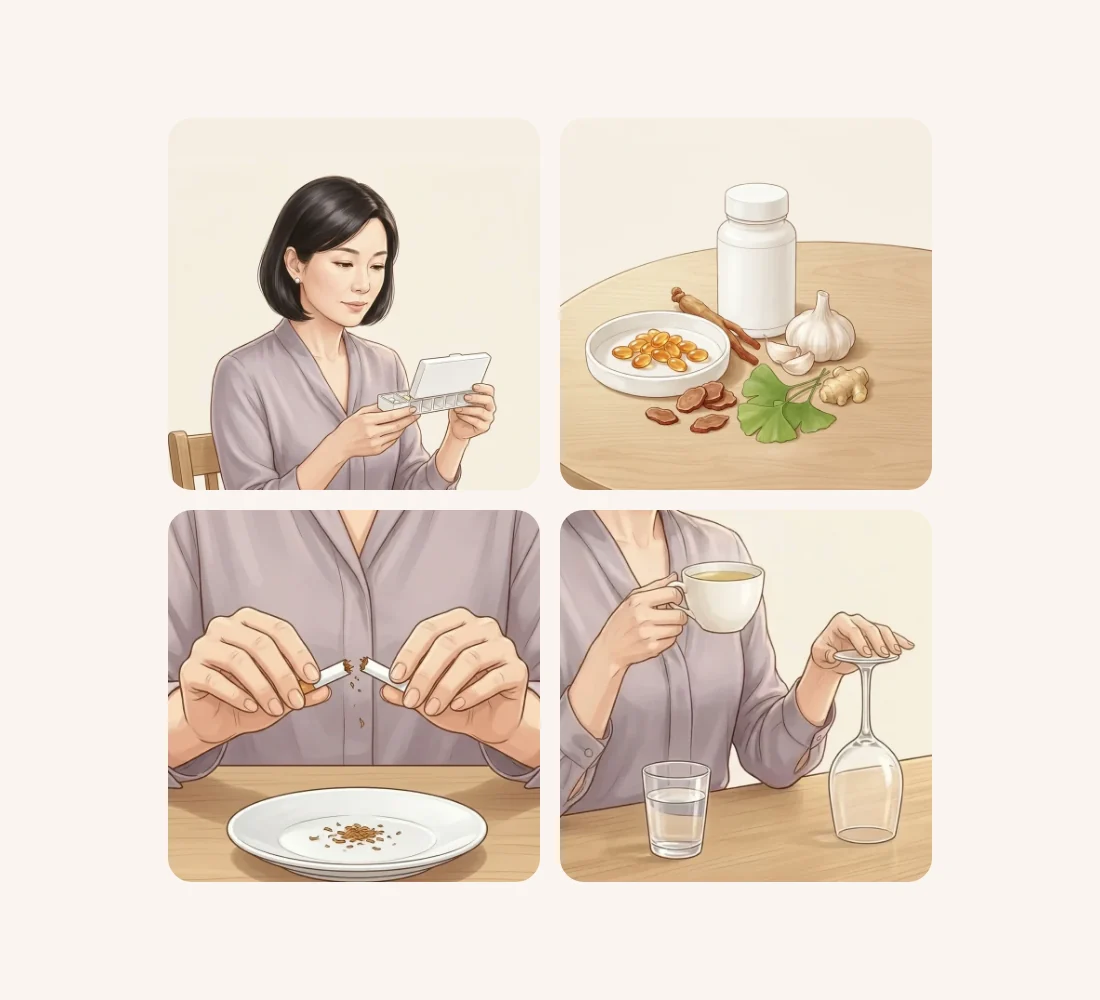
Why does your surgeon ask about medicines, supplements, smoking and alcohol?
At a surgical consultation, one set of questions comes up almost as often as questions about the shape you want: "Do you take any medicines? Any supplements? Do you smoke or drink?" They can sound like routine paperwork. In fact, your answers can change how surgery is prepared, and sometimes when it takes place.
There are three main reasons for asking.
- Bleeding: some medicines and supplements weaken the body's ability to stop bleeding. This can increase bleeding during surgery, or lead to a hematoma, a collection of blood that pools and clots under the skin after surgery.12
- Wound healing: smoking and alcohol are linked to wounds that heal slowly or become infected.46
- Anesthesia and other medicines: some herbal products strengthen the effect of sedatives, lower blood sugar, or change how quickly other medicines are broken down in the body.2
This does not mean you should stop everything you take. Suddenly stopping a medicine you take every day can also raise the risk after surgery.2 So the principle is simple. Tell your surgeon everything you take, and decide item by item whether to continue it or when to pause it. The cards below show four things people commonly need to sort out before surgery.
Before surgery, if this applies to you
1You take prescription medicines every day
Tell us what you take and why. Blood thinners and heart medicines are planned with the doctor who prescribed them
Don't stop on your own
2You take supplements, health foods or herbal remedies
Ingredients such as garlic, ginkgo and ginseng can affect bleeding or blood sugar, so you are told when to pause them
Ask when to pause
3You smoke
To reduce wound and breathing complications, quitting 4 weeks or more before surgery is advisable
Quit smoking
4You drink regularly
Drinking is linked to infection and wound problems after surgery, so plan a break around your surgery
Alcohol break
How do medicines interfere with the way bleeding stops?
Knowing how bleeding stops makes it easier to see why certain medicines need care. When a small blood vessel is cut, platelets (tiny cell fragments that float in the blood) gather at the injury first and form a plug. Then clotting proteins in the blood weave a mesh called fibrin, which sets the plug firmly in place.
Medicines act on one of these two steps.
- The platelet step: aspirin, anti-inflammatory painkillers (NSAIDs) such as ibuprofen, and antiplatelet drugs such as clopidogrel make platelets less able to clump together. Some supplements, including garlic, ginkgo, omega-3 fish oil and vitamin E, have also reduced platelet clumping in laboratory studies.2
- The clotting-protein step: warfarin and the newer oral anticoagulants (such as apixaban and rivaroxaban) slow down the way blood sets. Clinical guidelines also treat warfarin, oral anticoagulants and antiplatelet drugs as separate groups, each with its own plan around surgery.3
Why bleeding-related medicines matter so much in a facelift
A facelift lifts the skin and the layer beneath it over a wide area and then fixes them in a new position. If blood collects in the lifted space, it forms a hematoma. A UK study reviewed 1,078 consecutive facelifts performed by two high-volume surgeons between 1994 and 1999. Hematoma occurred in 45 patients (4.2%); the authors note that hematoma is the most common complication of facelift surgery. A hematoma can prolong facial swelling or lead to skin necrosis, where part of the skin dies because it loses its blood supply.1
The study weighed several factors together to see which ones were linked to hematoma. Five stood out as significant:1
- taking aspirin or anti-inflammatory painkillers
- smoking
- systolic blood pressure (the higher number, measured as the heart contracts)
- the patient's sex
- anterior platysmaplasty (tightening the muscle at the front of the neck)
Put simply, sorting out your medicines and smoking before surgery means dealing in advance with factors linked to the most common complication after a facelift.
Painkillers you buy now and then for headaches or period pain can belong to this group too. Ask in advance which painkillers are fine to take before and after surgery.
Do supplements and herbal remedies need to be stopped too?
It is easy to assume that something natural must be harmless. Yet supplements and herbal products contain active ingredients that act on the body. Anesthesia researchers at the University of Chicago reviewed how 15 commonly used supplements (11 herbal medicines and 4 other supplements) affect blood clotting and platelets. Their review lists reported bleeding risks for garlic, ginkgo, ginseng, green tea, saw palmetto, St John's wort and fish oil (omega-3).2
People having surgery appear to use herbal products more often than the general population. In surveys cited by the review, 22% of patients seen at a preoperative clinic and 32% of patients having day surgery were taking herbal products. More than 70% of patients, however, did not mention them during routine preoperative assessment.2 Supplements are easy to leave out, because many people do not think of them as medicine at all.
| Ingredient | What has been reported | Good to know |
|---|---|---|
| Garlic extract or supplements | Reduces platelet clumping, depending on the dose | Not consistent in human trials; a raised clotting test value (INR) with warfarin has been reported2 |
| Ginkgo extract | 10 case reports linked to serious bleeding | In a clinical trial, platelet clumping fell but clotting tests and bleeding time did not change2 |
| Ginseng, including red ginseng | Lowers blood sugar after meals; reduces platelet clumping in lab studies | A concern for low blood sugar while fasting; reported to weaken warfarin; evidence for bleeding is weak2 |
| Ginger and green tea extracts | Reduce platelet clumping in lab studies; green tea prolonged bleeding time in mice | Green tea contains vitamin K, which can weaken the effect of warfarin2 |
| Omega-3 fish oil | Can reduce platelet clumping | No clear bleeding problem in clinical trials, but case reports with warfarin exist2 |
| Vitamin E | Reduces platelet clumping; linked to a tendency to bleed | Results in human studies are mixed2 |
| Herbs such as danshen and dong quai | Platelet effects and drug interactions reported | For mixed herbal prescriptions, bring the list of ingredients2 |
| Valerian and kava | Can strengthen the effect of sedatives | Stopping valerian suddenly after long use can cause withdrawal symptoms2 |
| St John's wort | Speeds up the breakdown of other medicines | Medicines taken alongside it may work differently2 |
When should you pause them?
The same review notes that there are no official guidelines on supplement use before surgery. It also reports that education materials for the public and for professionals advise stopping natural products two to three weeks before surgery. For herbs whose time in the body is known, the timing can be tailored. For herbs without such data, stopping two weeks before surgery is recommended. Because the effects of supplements on the blood are poorly understood and hard to predict, the review concludes that it is prudent to advise stopping them before surgery.2
In other words, you pause them not because harm is certain, but because the size of the risk cannot be predicted in advance. A few products, such as valerian, can cause problems when stopped suddenly after long use.2 So rather than throwing everything out today, ask when and how to pause each one. Bring your supplement bottles to the consultation, or photograph the front and back so the ingredients can be read. The review, too, recommends that patients bring their herbal products and supplements to the preoperative assessment.2
Which medicines should you never stop on your own?
Some medicines work the other way: stopping them on your own because surgery is coming can be the dangerous choice. The review above points out that stopping regular medicines before surgery is associated with more complications and deaths after surgery. It sets out a general rule. Medicines that can cause rebound or withdrawal symptoms when stopped are usually continued; medicines that are not essential and add to surgical risk are stopped.2
The clearest example is medicine taken to prevent blood clots (clumps of blood that set inside blood vessels). People take these after a stent has been placed in a heart artery, for atrial fibrillation (an irregular heartbeat), after an artificial heart valve has been fitted, or after an earlier clot. Stopping them may reduce bleeding, but the risk of a blood vessel becoming blocked during the pause has to be weighed as well.
In 2022 the American College of Chest Physicians (ACCP) published a guideline on this situation. A guideline is a set of practice recommendations that a specialist society writes after reviewing the evidence. This one covers people who take these medicines long term and need planned surgery. It deals with warfarin, heparin "bridging", oral anticoagulants and antiplatelet drugs in 44 recommendations, with separate advice for minor procedures such as skin procedures. Only two recommendations are strong, and the authors state that uncertainty remains for most questions.3 So rather than following one fixed rule, the doctor who prescribed the medicine and your surgeon look at your condition and decide together when to stop and when to restart.
Do not stop or reduce these on your own, and always mention them:
- Blood thinners: warfarin, oral anticoagulants, and antiplatelet drugs such as aspirin and clopidogrel
- Blood pressure and heart medicines
- Diabetes medicines and insulin: how to take them is planned around fasting before surgery
- Medicines for depression, anxiety or sleep
- Steroids, immune-suppressing medicines and thyroid medicines
- Birth control pills and hormone therapy
- Injections started recently, such as weight-loss injections
Being on this list does not mean you will simply keep taking everything as usual. It means a doctor decides whether to continue, pause or switch each one. The drawing below shows one way to sort what you take into three groups.
How much does smoking affect wound healing?
A researcher at the University of Copenhagen in Denmark pooled studies from many surgical fields in a systematic review (a study that gathers all the relevant research using a set method) and meta-analysis of smoking and wound healing. Across 140 cohort studies with 479,150 patients, wound problems were clearly more common in smokers than in non-smokers.4
Wound problems that were more common in smokers
An odds ratio compares how likely something is to happen in two groups. A value of 1 means no difference, and a value above 1 means the problem was more common in smokers. Take necrosis, where part of the skin or tissue dies because blood no longer reaches it. Its odds ratio of 3.60 means it was markedly more common in smokers than in non-smokers.4
What about people who had already quit? Compared with people who had never smoked, former smokers had a slightly higher odds ratio for wound problems, 1.30. Compared with current smokers, though, theirs was lower, at 0.69.4 Quitting, then, leaves you better placed than continuing to smoke, even if not quite level with someone who never smoked.
In operations that lift the skin over a wide area, such as a facelift, both necrosis and hematoma need attention. In the facelift study above, smoking was also one of the factors linked to hematoma.1 Liposuction and breast surgery use smaller incisions, but they still leave wounds, so smoking is part of the plan for any operation.
How early should you quit smoking before surgery?
Anesthesia researchers at the University of Toronto pooled 25 studies of people who stopped smoking within six months before surgery. They set the risk for current smokers at 1 and compared complications after surgery according to how long people had been smoke-free.5
- Breathing (respiratory) complications: the figure was 1.20 for people who quit less than two weeks before surgery and 1.14 for those who quit two to four weeks before, with no clear difference from current smokers. It was lower at 0.77 for people who quit more than four weeks before, and 0.53 for more than eight weeks.5
- Wound-healing complications: the figure was 0.69 for people who quit more than three to four weeks before surgery.5
The authors concluded that at least four weeks without smoking reduces respiratory complications, and at least three to four weeks reduces wound-healing complications. They added that quitting for less than four weeks does not appear to increase or reduce the risk of respiratory complications.5
So the earlier you quit, the better, and quitting now is not a mistake even if surgery is close. The Danish review also included four randomized trials. In them, programs that helped people stop smoking around the time of surgery reduced surgical site infections (odds ratio 0.43). Other wound-healing problems were not clearly reduced (0.51, a result that was not statistically certain).4
Stay off cigarettes after surgery too, while the wounds are healing. If you are considering surgery, the most practical step is to start quitting now rather than waiting for a date.
How much should you cut back on alcohol before surgery?
Drinking has been studied in the same way. A pooled analysis of 55 studies looked at drinking before surgery and complications within 30 days of the operation, and in this systematic review and meta-analysis from Denmark, people who drank before surgery had several kinds of complication more often.6
| What happened after surgery | Relative risk (above 1 = more common) |
|---|---|
| Any complication | 1.56 |
| Infection | 1.73 |
| Wound complications | 1.23 |
| Lung complications | 1.80 |
| Longer hospital stay | 1.24 |
| Admission to intensive care | 1.29 |
People who clearly drank heavily also had a higher risk of death after surgery (2.68). Low to moderate drinking showed no clear link with complications, but very few studies had looked at it.6 In short, infections, wound problems and lung complications were more common in people who drank before surgery; for light drinking there is too little research to say.
The analysis did not establish how many weeks before surgery drinking should stop.6 So once your date is set, plan to take a break from alcohol from then on. Tell us honestly how much you usually drink: how many days a week, and how much each time. If you drink heavily, agree with your medical team on how and when to cut down.
Does preparation differ by type of surgery?
The principles for sorting your medicines stay the same, but what needs the most attention depends on the extent of surgery and the anesthesia. Here are three operations from our treatment pages as examples:
| Surgery | Anesthesia | Hospital stay | Stitches |
|---|---|---|---|
| Facelift | General or sedation | 1 night (same day if stable) | Yes |
| Liposuction | Sedation + local | Same-day discharge | Yes |
| Safe breast augmentation | No general anesthesia | Same-day discharge | Yes |
- Wide lifting: in surgery that lifts the skin and fascia layer over a wide area, such as a facelift, hematoma is the most common complication. Bleeding-related medicines, blood pressure and smoking are therefore checked especially carefully.1
- Sedation: when sedative medicines are used, it matters whether you take herbs that can strengthen sedation, such as valerian or kava.2
- Fasting: you usually fast before surgery, so ginseng, which lowers blood sugar, and diabetes medicines each need their own plan.2
- Combined procedures: having several procedures at once widens the extent of surgery and adds to what needs preparing.
Recovery time and follow-up visits vary with the extent of surgery and your individual condition. For the operations themselves, see our guides to facelift surgery, liposuction and breast augmentation.
What should you do in the weeks before surgery?
Here is the general flow, step by step. Your actual dates depend on your medicines and the extent of surgery, so the instructions you receive at consultation always come first.
What to take care of before and after surgery
- 4+ weeks beforeStop smoking · cut down on alcohol · list your medicines and supplements
- At consultationShow medicine packs and supplement bottles · confirm which medicines need your prescriber
- About 2 weeks beforePause supplements, health foods and herbal remedies from the date given
- A few days beforeBlood thinners only as scheduled · only painkillers you were cleared to take
- Day of surgeryFasting and morning medicines as instructed
- After surgeryRestart medicines on the dates given · keep avoiding smoking and alcohol
When you write your list, it helps to include:
- The name and dose of each medicine, why you take it and who prescribed it (a photo of the pack or prescription also works)
- Things you take now and then: tablets for headaches or period pain, cold remedies, sleep aids, diet products
- Health products such as red ginseng, herbal juices or pills, and herbal prescriptions, which people often do not count as medicine
- Anything you took in the last two to three weeks: even if you have stopped, note when you last took it
If you kept taking something you were meant to pause right up to surgery, tell us straight away rather than keeping quiet. When the team knows you recently took an herb that acts on platelets, they can prepare for it.2
How we approach it at Bonita Clinic
At Bonita Clinic, if you tell us at consultation which medicines and supplements you take, and whether you smoke or drink, these can be weighed together when the extent of surgery and the anesthesia are decided.
Treatment options you can discuss in Seoul
Bonita Clinic has treated patients at the same location since opening in 1995, with Dr. Kwang-Seop Jung seeing patients throughout. The preparation described in this guide applies to the operations on our treatment pages, for example:
- Face Lift: the SMAS (fascia) layer is lifted and fixed through short incisions with an endoscope; jaw liposuction, stem cell fat grafting or dissolvable threads are added only when needed
- Liposuction: only the areas that need it are reduced, keeping the body's natural line
- Safe breast augmentation: small endoscopic incisions, without general anesthesia
Which operation suits you, and what preparation it needs, is decided after an examination.
Why do the plan and cost differ from person to person?
Two people having what sounds like the same operation can need different preparation and a different plan. What shapes the plan, and with it the cost, is mainly the following.
- Type and extent of surgery
- Anesthesia: general, sedation or local
- Procedures combined at the same time
- Your health conditions and daily medicines
- Whether blood thinners need a plan with your prescriber
- Time needed to pause medicines or stop smoking
Final plan and quote after an in-person exam
A final estimate is given only after an in-person examination, once the extent of surgery is clear. Your medicine list and photos help narrow down the options, but the plan itself is settled at the examination.
What can be reviewed before your visit, and what needs an in-person exam?
For this topic, a good deal can be prepared in advance through messages and photos. Some decisions, though, can only be made once you have been examined in person.
Can be reviewed before your visit
- Your medicines, with ingredient names and doses
- Photos of supplement labels
- How much you smoke and drink
- Health conditions and past surgeries
- Photos of the area you want treated
Decided at the in-person exam
- Extent of surgery and anesthesia
- Which medicines to pause, and when
- Your general condition, checked in person
- Blood-thinner plan with your prescriber
- Final schedule for surgery and follow-up
Before your visit, it helps to send your list of medicines with ingredient names and doses, photos of supplement labels, how much you smoke and drink, any health conditions or past surgeries, and photos of the area you would like treated. You can send us a message with your list and questions before planning your trip to Seoul. Our guide on taking photos for an online consultation explains which photos help most.
Coming to Seoul from abroad: medicines, quit dates and the trip home
If you live outside Korea, the conversation about your medicines starts well before you arrive, so a little extra planning helps.
- Use ingredient names. Brand names differ between countries, so a familiar medicine can look unfamiliar under another name. Write down the active ingredient (generic name) and dose of each item, and bring the original packs or clear photos of the labels.
- Talk to your prescribing doctor at home first. If you take a blood thinner, the decision about stopping and restarting depends on why you take it, and the guideline above leaves much of it to individual judgment.3 The doctor who knows your heart or blood-vessel condition is the right person to discuss it with, ideally before your travel dates are fixed. A short written note of why you take it and what they advise is useful to bring.
- Do not start anything new. Avoid starting new supplements, tonics or herbal products in the weeks before surgery, including ones bought during your trip. Their effects on bleeding and on other medicines are hard to predict.2
- Count back from the surgery date. Quitting at least four weeks before surgery is linked to fewer breathing complications, and more than three to four weeks to fewer wound-healing complications,5 so set your quit date from the day of surgery, not from the day you arrive.
- Plan the restart. Before you leave Seoul, confirm when to restart each paused medicine, and share that plan with your doctor at home.
What is confirmed in advance is the treatment information above: the anesthesia, hospital stay and stitches for each operation. How long you should stay in Seoul, when stitches come out and how many follow-up visits you need depend on the extent of surgery and how you recover, so these are planned together with you at consultation. After you return home, keep avoiding smoking and alcohol while the wounds heal, and contact a doctor promptly if swelling, pain or bleeding increases instead of settling. Our guide to aftercare once you are back home covers this stage in more detail. If your trip home involves a long flight after a facelift, see flying after a facelift.
Real treatment cases: facelift
These are facelift cases from Bonita Clinic, the main treatment this guide relates to. They are surgical cases, not cases about medicines or smoking. The time since surgery is not given because it could not be confirmed for each photo. Results vary from person to person.
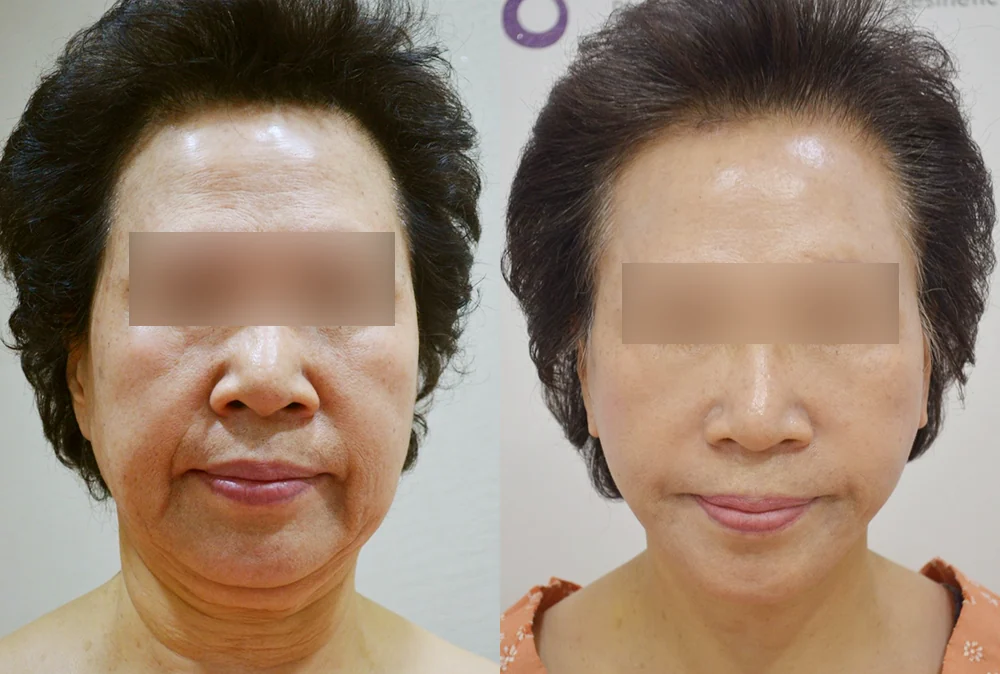
The lower cheeks, mouth corners and neck, seen from the front
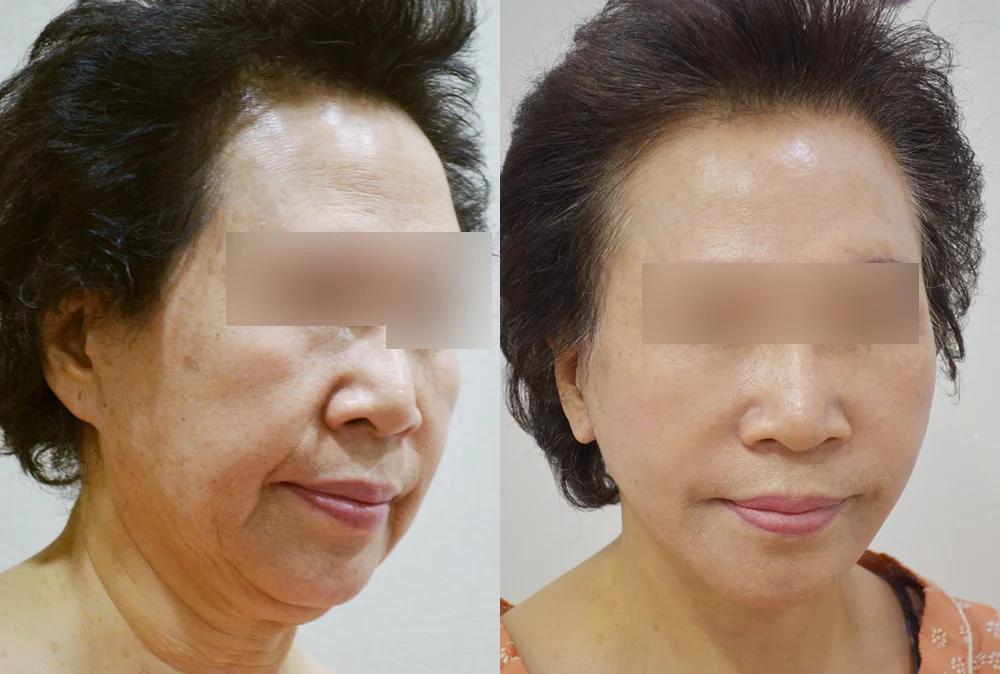
The cheek, jawline and neck, seen from an angle
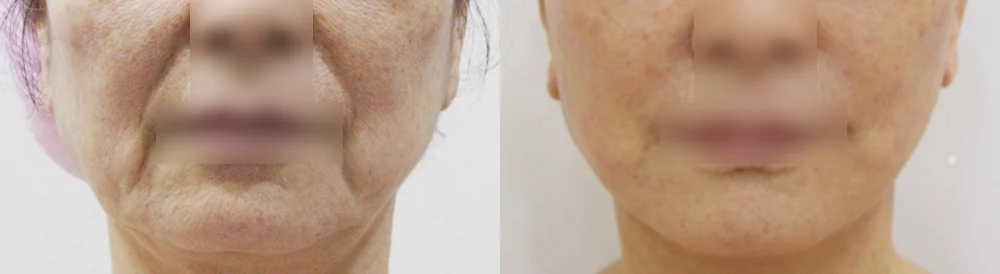
A close view of the mouth corners and jawline
* Results vary from person to person. Side effects are possible, so please decide after a thorough consultation with a doctor.
Frequently asked questions
My surgery is two weeks away. Is it still worth quitting smoking now?
Quitting now does no harm, according to a meta-analysis of 25 studies: quitting for less than four weeks did not appear to increase or reduce respiratory complications.5 Wound-healing complications, however, were lower in people who had been smoke-free for more than three to four weeks,5 so if time is short, discuss the surgery date with us. Staying off cigarettes while the wounds heal after surgery also helps.
I take red ginseng or an herbal prescription. When should I stop?
Ginseng lowers blood sugar, which raises a concern about low blood sugar while fasting, and it has been reported to weaken the effect of warfarin. Among herbal ingredients, danshen and dong quai have been reported to act on platelets and to interact with medicines.2 For herbs whose time in the body is not known, stopping two weeks before surgery is recommended.2 If you take a mixed herbal prescription, bring its list of ingredients; it helps decide when to pause it.
Do I need to stop omega-3 or vitamin E?
The research is mixed. Omega-3 showed no clear bleeding problem in clinical trials, but case reports describe sharply raised clotting test values in people who took it with warfarin. For vitamin E, reports of a tendency to bleed sit alongside human trials that could not confirm it.2 The review concludes that because the effects of supplements on the blood are hard to predict, it is prudent to advise pausing them before surgery.2 Get a date for pausing them from your medical team.
I take aspirin for my heart. Should I stop it before surgery?
Do not stop it on your own. Aspirin taken because of a heart stent or a past clot is handled differently from aspirin taken now and then for pain. The guideline deals with people on antiplatelet drugs around surgery separately and states that much remains uncertain.3 In the facelift study, taking aspirin or anti-inflammatory painkillers was linked to hematoma.1 That is why the doctor who prescribed it and your surgeon decide together.
Do e-cigarettes and heated tobacco count too?
The studies cited here looked at people who smoke and did not analyze e-cigarettes or heated tobacco separately.45 So these studies cannot tell us how much those products affect wound healing. Plan to stop them around surgery just as you would cigarettes, and tell us which products you use and how much.
What to prepare before your consultation
- A list of medicines: ingredient (generic) name, dose, why you take it and who prescribed it (photos of packs or prescriptions)
- Supplements, health foods and herbal remedies: photos of the front and back of each bottle, or the list of ingredients
- Smoking (how many a day, including e-cigarettes and heated tobacco) and drinking (how many days a week, how much each time)
- Health conditions: high blood pressure, diabetes, heart disease, any past blood clot
- Any bleeding that was hard to stop: frequent nosebleeds, long bleeding after dental work or an earlier operation, bruising easily
- The operation you are considering, and any previous procedures or surgery
Bonita Clinic is on the 3rd floor of 565 Gangnam-daero, Seocho-gu, Seoul, about 100 m on foot from Exit 8 of Nonhyeon Station (Line 7). For more on each operation, see our Face Lift, Liposuction and Safe Breast Augmentation pages.
References (6)
Sources that support the explanations in this article. Study findings describe general trends and do not guarantee individual results.
- Grover R, Jones BM, Waterhouse N. The prevention of haematoma following rhytidectomy: a review of 1078 consecutive facelifts. Br J Plast Surg. 2001;54(6):481-486.doi:10.1054/bjps.2001.3623Review of the records of 1,078 consecutive facelifts by two high-volume surgeons, 1994–1999 (abstract): hematoma in 45 patients (4.2%); the introduction describes hematoma as the most common complication of facelift, able to prolong swelling or cause skin necrosis; on multivariate analysis, aspirin or NSAID intake, smoking, systolic blood pressure, sex (direction not stated in the abstract) and anterior platysmaplasty were significantly associated with hematoma
- Wang CZ, Moss J, Yuan CS. Commonly Used Dietary Supplements on Coagulation Function during Surgery. Medicines (Basel). 2015;2(3):157-185.doi:10.3390/medicines2030157Review of 11 herbs and 4 other supplements and their effects on clotting and platelets (full text): bleeding risks reported for garlic, ginkgo, ginseng, green tea, saw palmetto, St John's wort and fish oil; ginseng and low blood sugar; warfarin interactions; valerian and kava strengthen sedation, valerian withdrawal; mixed findings for vitamin E and omega-3; 22–32% of surgical patients use herbs, over 70% do not say so; stop two weeks before surgery if no data (2–3 weeks in education materials); stopping regular medicines carries risk. Evidence mostly lab, animal and case reports
- Douketis JD, Spyropoulos AC, Murad MH, et al. Perioperative Management of Antithrombotic Therapy: An American College of Chest Physicians Clinical Practice Guideline. Chest. 2022;162(5):e207-e243.doi:10.1016/j.chest.2022.07.025American College of Chest Physicians clinical practice guideline (abstract): 44 recommendations, only two strong, for the perioperative management of people on long-term warfarin, heparin bridging, oral anticoagulants or antiplatelet drugs who need planned surgery, with separate recommendations for minor procedures such as skin procedures; uncertainty remains for most questions
- Sørensen LT. Wound healing and infection in surgery. The clinical impact of smoking and smoking cessation: a systematic review and meta-analysis. Arch Surg. 2012;147(4):373-383.doi:10.1001/archsurg.2012.5Systematic review and meta-analysis of 140 cohort studies with 479,150 patients (abstract): adjusted odds ratios in smokers of 3.60 for necrosis, 2.07 for delayed healing and dehiscence, 1.79 for surgical site infection and 2.27 for wound complications; former smokers vs never smokers 1.30 and vs current smokers 0.69; in 4 randomized trials, cessation programs reduced surgical site infection (0.43) but not clearly other healing complications (0.51)
- Wong J, Lam DP, Abrishami A, et al. Short-term preoperative smoking cessation and postoperative complications: a systematic review and meta-analysis. Can J Anaesth. 2012;59(3):268-279.doi:10.1007/s12630-011-9652-xMeta-analysis of 25 studies of people who quit smoking within six months of surgery (abstract): compared with current smokers, respiratory complications were 1.20 for quitting under 2 weeks and 1.14 for 2–4 weeks (no clear difference), 0.77 for more than 4 weeks and 0.53 for more than 8 weeks; wound-healing complications 0.69 for more than 3–4 weeks. The authors conclude at least 4 weeks (respiratory) and 3–4 weeks (wound healing) are needed
- Eliasen M, Grønkjær M, Skov-Ettrup LS, et al. Preoperative alcohol consumption and postoperative complications: a systematic review and meta-analysis. Ann Surg. 2013;258(6):930-942.doi:10.1097/SLA.0b013e3182988d59Systematic review and meta-analysis of 55 studies (abstract): drinking before surgery was associated with overall complications 1.56, infection 1.73, wound complications 1.23, lung complications 1.80, longer hospital stay 1.24 and intensive care admission 1.29 within 30 days; clearly defined heavy drinking with death 2.68; no clear link for low to moderate drinking, though very few studies examined it
About this article
This article separates general medical information from Bonita Clinic's own approach. Because the right decision depends on each person's condition, it is not a substitute for a consultation.