KOKorean
 ENEnglish
 JP日本語
 CN中文(简体)
 TW中文(繁體)


Back Home After Plastic Surgery in Korea: What Aftercare Do You Need?
Once you are back home after plastic surgery in Korea, there are four things to manage. Keep a record of your surgery's name, date and extent and the medicines you were given, so a doctor near home can understand what was done. Learn the signs that need prompt care, such as a surgical area that keeps getting redder, hotter and more painful, one leg that becomes swollen and painful, or sudden shortness of breath. Because swelling and scars change over weeks and months, keep up care such as sun protection and silicone, and record changes with dated photos taken in the same light and at the same angles. At Bonita Clinic, recovery time, follow-up visits and your return date are planned with you at consultation, based on the extent of your surgery and your own condition.
Curious about your own case? Ask us online →
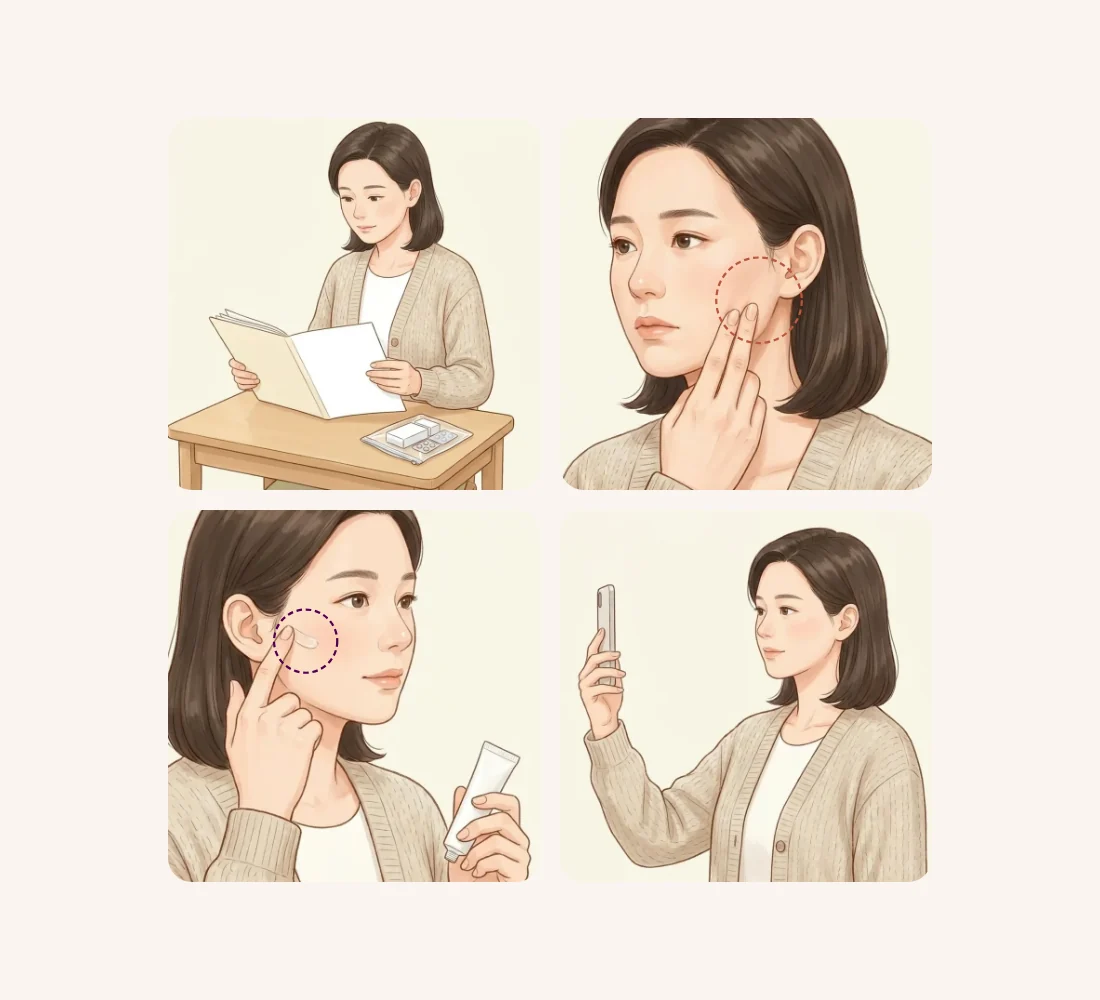
Recovery continues after you fly home: where do you start?
When you have surgery in Seoul and then fly home, the rest of your recovery happens far away from the clinic that operated on you. Wounds still need to close, swelling still needs to go down, and scars still need to settle. None of this stops on the day you leave Korea. It carries on slowly over weeks and months. That is why deciding before you leave what you will watch at home, and whom you will contact if something changes, is part of recovery itself.
The US Centers for Disease Control and Prevention (CDC) publishes the Yellow Book, a health guide for international travelers, and it has a chapter on medical tourism (traveling to another country for medical care). It advises travelers to discuss a plan for handling complications both with the doctor who treats them abroad and with their own doctor at home.1 It also stresses that if you suspect a complication, you should not delay getting medical care, whether you are still traveling or already back home.1
This guide breaks the time after you return into four parts:
- What to tell a doctor at home: which surgery you had and when, and which medicines you were given
- Signs that need prompt care: infection of the surgical wound, bleeding that will not stop, and a blood clot (a lump of blood that has set inside a vein) in the legs
- Swelling and scar care: which changes you can watch, and which you should not wait on
- Sharing your progress with photos: what photos can and cannot show
Four situations you may meet at home
1You need to explain your surgery to a local doctor
Show a record of the surgery name, date and extent, and the medicines you were given
Records and medicines
2The surgical area is getting redder, hotter and more painful
This may be infection: see a doctor near you without delay
Signs of infection
3Some scarring and swelling are still there
Keep up care such as silicone and sun protection, and show the scar to a doctor every few weeks
Scars and swelling
4You want to show how you are healing
Take dated photos in the same light and at the same angles, and send them if something worries you
Progress photos
What does research show about problems after surgery abroad?
What happens to people who have cosmetic surgery abroad and run into problems after they get home? Twenty published studies describe 214 patients who were treated in the US for complications after cosmetic surgery in another country, and a US team brought them together in a systematic review (a study that collects all the relevant research using a set method). Most had traveled to the Dominican Republic, and the most common operation was abdominoplasty (a tummy tuck).2
About half of the complications (50.9%) were infections. Others included wounds that opened or healed poorly (7.3%), seroma, which is fluid collecting under the wound (4.6%), and clots or emboli blocking blood vessels (3.2%). Overall, 36.8% of patients were admitted to hospital, and 51.8% of those whose treatment was reported needed an operation. In every study, treatment lasted more than two months on average.2
These figures do not mean that this is how often problems happen after surgery abroad. The review only included people who already had complications, so it cannot tell us what share of travelers run into trouble. The countries and operations in the review may also be very different from your own situation.
Even so, the review makes two things clear. First, infection was the most common problem people faced after returning home. Second, the authors named unavailable or incomplete records from the facility abroad as a challenge for the doctors treating these patients at home.2 Put simply, two things hold up your aftercare once you are home: noticing problems early, and having a record that explains your surgery.
What should you tell a doctor at home?
The first doctor you see after returning home will not know what was done in Seoul. To judge your symptoms properly, they need to know where the incisions are, what was placed in your body and which medicines you took. The CDC Yellow Book advises medical travelers to ask for copies of their overseas medical records in English and to show them to any doctor they see afterwards. It also mentions that the American College of Surgeons recommends getting a complete set of medical records before you return home.1
The record to show your doctor at home
A useful record covers:
- The surgery: its name and date, the areas treated, and where the incisions and stitches are. For example, a face lift uses incisions in front of and behind the ear and along the hairline, while rhinoplasty scars are mostly inside the nostrils and on the columella (the strip of skin between the nostrils).
- Anything placed or moved: what remains in your body, such as an implant, cartilage or fat, and where it is
- Medicines you were given: names, doses and how long to take them. Whether you received antibiotics (medicines that kill bacteria) matters most. The UK's National Institute for Health and Care Excellence (NICE) guideline on surgical site infection says patients should always be told after their operation if they have been given antibiotics.3 Your doctor at home also needs this information to choose treatment if an infection is suspected later.
- About you: allergies, medical conditions and the medicines you take regularly, including blood thinners and hormone medicines
- Contacts and your last visit: the Seoul clinic's contact details, and what happened at your last check-up, such as whether all stitches were removed
How can you prepare these records?
- At your last check-up before departure, ask whether you can receive a surgical record or a summary of your care, and in which language.
- Take photos of your medicine packages or prescriptions.
- Keep photos of any paper records on your phone as well, so you can show them straight away even in an emergency department.
- Write down in one place the date of surgery, the date your stitches came out and the date you flew home. This helps when you later need to explain when a symptom started.
How should you continue your medicines at home?
Take your medicines exactly as instructed and for as long as instructed. If you want to stop or change one, talk to your doctor first. Do not stop a prescribed medicine just because you feel better, and do not take more of a leftover medicine on your own.
Changing time zones makes dose times easy to mix up. Before you leave, ask what time you should take each dose once you arrive home. Keep prescribed medicines in your cabin bag, not in checked luggage.
If a doctor at home prescribes something new, or you want to start a new painkiller or supplement, show them the list of medicines you were given in Seoul. Medicines that thin the blood, such as aspirin, can increase bleeding soon after surgery, so ask your doctor before taking them.
Which symptoms mean you should see a doctor straight away?
It is easier to judge changes after you get home if you sort them into three groups. Changes that get a little better each day can be watched and recorded. Changes at the surgical site that keep getting worse need a doctor without delay. Symptoms that could mean a blood clot, bleeding that will not stop and swelling that grows fast need emergency care straight away.
The NICE guideline describes a surgical site infection as a surgical wound with local signs such as heat, redness, pain and swelling. In more serious cases there is a fever, and the infection can make the wound edges separate or cause an abscess (a pocket of pus) deeper in the tissue.3 The same guideline says patients should be given advice on caring for their wound after discharge, on how to recognize an infection and on whom to contact if they are worried.3
If you are flying home, it helps to name two contacts in advance. One is a clinic or hospital near your home where you can be examined in person. The other is the clinic in Seoul that performed your surgery.
The CDC Yellow Book notes that the most common complications among medical tourists are related to infection. Complications that are not infections include blood clots, fat embolism (fat particles blocking blood vessels), uneven contours after cosmetic surgery and surgical wounds that come apart.1
| Group | Examples | What to do |
|---|---|---|
| Watch and record | Swelling and bruising easing a little each day, a scar that is pink and slightly firm, mild tightness around the wound | Take dated photos and keep up the care you were advised |
| See a doctor without delay | The surgical area becoming redder, hotter and more painful, pus or cloudy fluid, wound edges opening, swelling that starts growing again on one side, fever | Get examined near home and let the Seoul clinic know13 |
| Emergency care now | One leg swollen, painful or warm, sudden shortness of breath, chest pain when breathing, bleeding that will not stop (including nosebleeds after nose surgery), one side of the face or neck swelling fast and feeling tight and painful or making it hard to breathe, a high fever or chills with redness spreading fast | Go to an emergency department or call emergency services |
Swelling that puffs up again on one side after it had been going down can be caused by blood or fluid collecting under the wound. Seroma, a collection of fluid, was one of the complications reported in the systematic review above.2 These problems are hard to tell apart just by looking, so they need an in-person examination.
If one side of the face or neck swells quickly and feels tight and painful, or breathing becomes difficult, do not wait: get emergency care. The same applies to bleeding that will not stop, or a high fever or chills with redness spreading fast. Signs to watch around your flight home after a facelift are also covered in our guide to flying home after a facelift.
Why keep watching for blood clots after you are home?
The CDC Yellow Book explains that air travel and surgery each raise the risk of blood clots on their own.1 That is why long periods of sitting while you travel during recovery call for extra care. How to look after yourself on the plane is covered in our guide to flying after rhinoplasty. Here we focus on what happens after you arrive home.
Blood clots after surgery do not only appear in the first week. A meta-analysis (a study that combines and recalculates the results of earlier studies) pooled 22 prospective studies (studies that follow a defined group of patients forward in time), covering about 1.86 million patients and 24,927 symptomatic clots. Of the clots that appeared within four weeks of surgery, 47.1% came in the first week, 26.9% in the second, 15.8% in the third and 10.1% in the fourth.4 About half appeared in the first week, and the rest, just over half (52.8%), appeared in the second week or later.
Blood clots within 4 weeks of surgery: which week?
This study has limits. It mainly covered major general, urological and orthopedic operations, not cosmetic surgery on its own. It also shows when clots appeared, not how often they happen. Still, it is a clear reminder that the risk of a clot is not over just because you have flown home.
A clot can show itself in these ways:
- Deep vein thrombosis (a clot in a deep leg vein): one calf or leg becomes swollen, painful, warm or red
- Pulmonary embolism (a clot that has traveled to the lungs): sudden shortness of breath, chest pain when you breathe in, or a racing heartbeat
These are not symptoms to wait on. Get emergency care at once, and tell the doctors that you recently had surgery and a long-haul flight.
How long is swelling normal?
Swelling is usually greatest in the first few days after surgery and then goes down a little each day. It can take months to settle completely, so it is common to still have some swelling when you fly home. Our dorsal hump surgery guide charts a study that measured how swelling fades after rhinoplasty using 3D imaging. Bonita Clinic's face lift page also explains that, depending on the extent of surgery, time is needed for swelling to go down.
When you check swelling at home, look at its direction rather than its size:
- Going down: if it eases a little every day and both sides are settling in a similar way, keep watching and recording.
- Coming back up: if swelling that was going down starts to grow again, or one side suddenly puffs up and feels firm and painful, get examined.
Daily habits also affect healing. The CDC Yellow Book warns that typical vacation activities during the recovery period, such as drinking alcohol, strenuous exercise, sunbathing, swimming and long tours, can delay or impede healing.1 That warning applies just as much after you get home as it did while you were in Seoul. When to return to saunas, alcohol and exercise, and how long to keep your head raised in bed or use cold compresses, depend on the extent of your surgery, so follow the instructions you were given.
How do you look after your scar at home?
A scar keeps changing in color and firmness for months after the stitches come out. At first it is usually pink and a little firm; over time it generally fades and softens. So scar care after you get home is a job that lasts months, not days.
Silicone sheets or gels (silicone products you stick or smooth onto the scar) are the first-line non-surgical option for both preventing and treating scars, according to practical guidelines that 24 international scar experts updated in 2014 after reviewing the evidence. Other preventive measures they list are avoiding sun exposure, compression, taping and moisturizers.5 The guidelines also stress that the most important step is for a clinician to re-evaluate the scar every four to eight weeks and decide whether further treatment is needed.5 Once you are home, you can show the scar to a doctor near you, and photos taken under the same conditions make changes easier to compare. The same photos also help when you consult about scar treatment.
When to start silicone, how many hours a day and for how many months, and how much sun protection you need are covered in detail in our guide to scar care after surgery. Until the wound has fully closed, follow the instructions you were given about what to put on it.
Bonita Clinic's face lift page explains that incision marks continue to be cared for at our Scar Clinic. Face lift scars sit along the incisions in front of and behind the ear and along the hairline, and they are managed so they become less visible over time. Rhinoplasty scars are mostly inside the nostrils or on the columella, and they too are managed so they fade over time.
Do not rely on home care alone if you notice any of these changes:
- The scar is getting thicker and more raised
- It seems to be spreading sideways beyond the edges of the original wound
- It keeps itching or hurting
A scar like this may be a hypertrophic scar or a keloid. The difference between the two is explained in our guide to keloids and hypertrophic scars.
How should you take photos to share your progress?
Dated photos are the simplest progress record you can keep at home. They let you see for yourself how swelling is easing and how a scar's color and width are changing, and they give any doctor something to compare at your next visit. When a clinician re-evaluates the scar every four to eight weeks, as the scar guidelines recommend,5 photos taken under the same conditions make changes easier to compare.
For photos to be comparable, take them in the same place and light, at the same angles and distance, with a date on each and at set intervals, such as once a week. Which angles to take for each area, and how to keep light and distance consistent, are covered in our guide to taking photos for an online consultation.
Photos do have limits. Judged from photos alone, a fair share of real wound infections were missed. In a meta-analysis of 17 studies on the accuracy of remote care, telemedicine overall, including phone calls, photos and questionnaires, had a sensitivity (the share of real infections it correctly picked up) of 87.8% and a specificity (the share of non-infections it correctly ruled out) of 96.8%. Methods based on photographs alone did worse, with a sensitivity of 63.9% and a specificity of 92.6%.6 That means about one in three real infections could be missed from photos alone. Only five studies used photographs, though, so this is a broad estimate. The studies in this meta-analysis also looked at patients after general, vascular, trauma and obstetric or gynecological operations, not specifically after facial cosmetic surgery. Even so, warmth, tenderness when pressed and firmness do not show up in a picture after any kind of operation.
So use photos as a way to record and share your progress, not as a replacement for an examination.
Which of these sounds like your change?
- Swelling and bruising easing, scar slowly fadingKeep a dated photo recordCompare at your next consultation
- Redness, warmth, pain or fluid increasingSee a doctor near you firstShare photos and findings with the Seoul clinic too
- Leg swelling, breathlessness, bleeding that won't stop, or fast swelling of the face or neckEmergency care before any photos
Treatment options you can discuss in Seoul
Since opening in 1995, Bonita Clinic has stayed at the same location, where Dr. Kwang-Seop Jung, a board-certified plastic surgeon (Brazil), sees patients. The options connected with this guide are the ones described on our treatment pages:
- Facial surgical scar revision: for scars left after cosmetic surgery, such as alar reduction marks, pixie ear after a face lift or double-eyelid incision lines, we start by asking what surgery you had, where the incisions were and what treatment followed. Surgical restoration is done under local anesthesia or sedation with same-day discharge, and there are stitches; combined lasers then refine color and texture if needed. Scars from surgery at another clinic can be assessed too. See Facial Surgical Scars.
- Face lift: the SMAS (the fascia layer beneath the skin) is lifted and fixed through incisions in the crease in front of the ear and inside the hairline behind the ear, with an endoscope. It is done under general anesthesia or sedation, with a one-night stay (same day if stable), and there are stitches. Care of the incision marks continues at our Scar Clinic. See Face Lift.
- Rhinoplasty: concerns such as a hump, a crooked nose, the tip or a drooping tip, and revisions, are assessed by first checking the bone, cartilage, skin and tissue behind them. It is done under sedation with local anesthesia, with same-day discharge, and there are stitches. See Rhinoplasty.
For every option, recovery time and follow-up visits vary with the extent of treatment and your own condition.
Why do the plan and cost differ from person to person?
Two people who both had "surgery in Seoul" can need very different aftercare. A small scar revision on the face and a face lift with a night in hospital ask different things of your stay, your flight and your weeks at home. What shapes the plan, and therefore the cost, is what needs to be done and how recovery is likely to go.
- Type and extent of surgery
- When stitches come out
- Follow-up visits before you fly home
- Your scar tendency, such as past keloids
- Your clot risk and flight length
- Whether scar treatment is needed later
Final plan and quote after an in-person exam
A final estimate is given only after an in-person examination, once the extent of treatment is clear. Photos help narrow down the options, but the extent of treatment, and with it the length of your stay, is settled at the examination.
What can photos show, and what needs an in-person exam?
Photos are useful both before your visit and after you return. They clearly show the shape of a scar, its color and how swelling changes from one date to the next. But some things can only be judged by a doctor who can see and touch the area.
Photos can show
- Whether swelling is easing over time
- Scar color, width and length
- Changes in symmetry between dates
- A wound that is visibly open
- How far redness has spread
Needs an in-person exam
- Warmth and tenderness
- Fluid or blood under the skin
- How firm or raised a scar feels
- Fever and blood tests
- A suspected clot in the leg
Photos taken as described above, in good light and at consistent angles, are the most helpful. Along with your photos, please tell us what surgery you had and when, any treatment since, and what worries you. You can send us a message with your photos and questions, whether you are planning a visit to Seoul or checking in after you have returned home.
How we approach it at Bonita Clinic
From your last visit in Seoul to life back home
- 1Before you leaveWounds, stitches and swelling checked; ask about medicines and care
- 2Take your recordsSurgery name, date and extent, medicines, contacts
- 3Watch at homeKnow the signs of infection, clots and bleeding; keep up scar and swelling care
- 4Keep a recordTake dated photos; show them at check-ups and consultations
If a change worries you after you get home, let Bonita Clinic know as well, with photos. Sharing photos with us can help when you next consult us about your recovery. But for symptoms that need an in-person examination, such as a fever or a wound that is opening, please see a doctor near you first.
Real treatment cases: facial scars after surgery
If a surgical scar is still noticeable after it has settled, scar treatment is something you can consult us about. These cases appear on Bonita Clinic's Facial Surgical Scars page. The photos alone do not show the original surgery, the treatment used or the time since treatment, so we describe only what can be seen. Results vary from person to person.
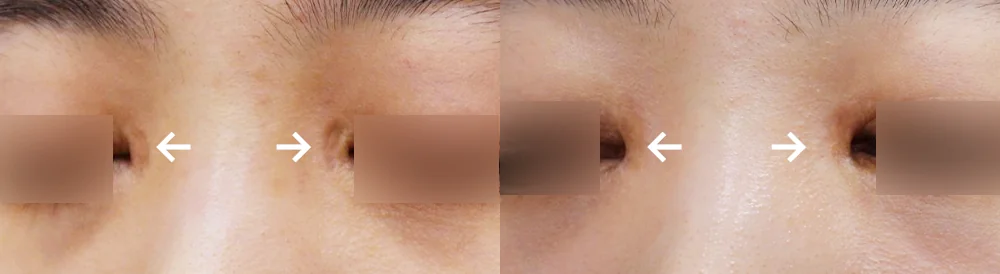
Scars around the inner corners of both eyes
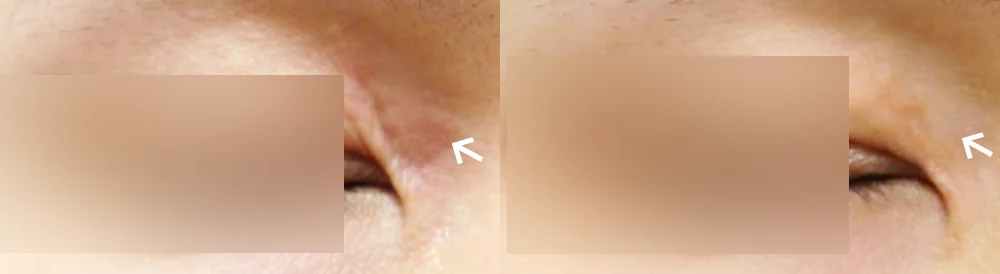
A red incision scar near the corner of the eye
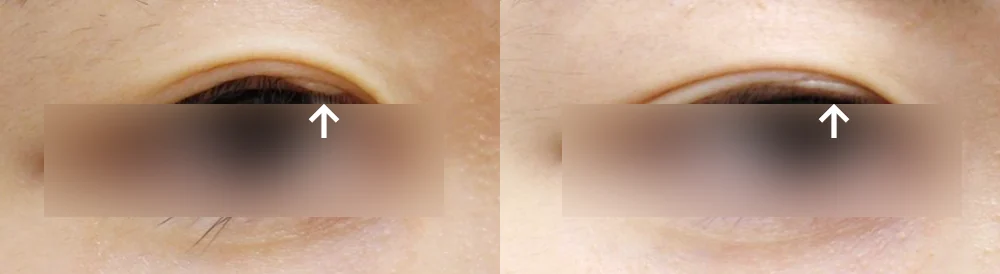
A scar along the upper eyelid crease
* Results vary from person to person. Side effects are possible, so please decide after a thorough consultation with a doctor.
Frequently asked questions
Where do I get my stitches removed after I return home?
When stitches come out depends on the area and how the wound was closed, so it helps to build stitch removal and a wound check into your travel dates. Typical timing by body area and how visits are planned are covered in our guide to planning a visit to Seoul for scar treatment. If stitches must come out after you return, bring a record of which stitches were used and where, and discuss it with a clinic near you.
Is it all right to be treated for a wound problem by a doctor at home?
If a problem needs prompt care, such as an infection or a wound that is opening, being examined and treated near home comes first. The CDC Yellow Book also advises not delaying care if you suspect a complication.1 Showing your surgical record and medicine list will make it easier for that doctor to decide what to do. Please let the Seoul clinic know what treatment you received as well.
My scar is still red and a little firm. Is that normal?
Surgical scars change in color and firmness over several months, so a scar that is still pink and slightly firm when you fly home is common. Scar management guidelines call for a clinician to re-evaluate the scar every four to eight weeks to decide whether more treatment is needed.5 Bring dated photos when you show the scar to a doctor near you or consult about scar treatment. But if the scar is getting thicker and more raised, spreading beyond the original wound, or itching and hurting, please arrange a consultation.
Can someone tell from photos alone whether everything is fine?
Photos help show how swelling and scars change over time. But when studies that judged surgical site infection from photos alone are pooled, about one in three real infections is estimated to be missed (with only five studies, the range is wide).6 Warmth, tenderness and firmness do not show up in photos. If redness, warmth or pain keeps getting worse, or you have a fever, see a doctor near you as well as sending photos.
When can I go back to exercise, saunas and sun?
It depends on the extent of your surgery, so follow the instructions you were given. The CDC Yellow Book warns that alcohol, strenuous exercise, sunbathing, swimming and long tours during the recovery period can delay or impede healing.1 Because avoiding sun exposure is recommended for scars,5 cover the scar or use sunscreen when you go outside.
What to prepare before you leave Seoul
- Whether you can receive a surgical record or care summary, and in which language
- The names, doses and duration of your medicines, and especially whether you had antibiotics
- Whether all stitches are out, or whether stitches or a follow-up visit remain
- How and when to start wound and scar care at home
- Who to contact if something worries you: a clinic near home and the clinic in Seoul
- Where and how often you will take dated photos
Bonita Clinic is on the 3rd floor of 565 Gangnam-daero, Seocho-gu, Seoul, about 100 m on foot from Exit 8 of Nonhyeon Station (Line 7). Treatment details are on our Facial Surgical Scars, Face Lift and Rhinoplasty pages. When scars settle and when to treat them are covered in our guide to when to treat a surgical scar, and planning a stay in our guide to planning a visit to Seoul for scar treatment.
References (6)
Sources that support the explanations in this article. Study findings describe general trends and do not guarantee individual results.
- Stoney RJ, Leidel L. Medical Tourism. CDC Yellow Book 2026: Health Information for International Travel. 2025;Health Care Abroad (2026 edition, page dated 2025-04-23).US CDC Yellow Book 2026, Medical Tourism chapter (official page): plan for complications with both the clinician abroad and your doctor at home; get copies of overseas records in English for later doctors (the American College of Surgeons advises complete records before returning); do not delay care if a complication is suspected; infection-related complications are most common, others include clots, fat embolism, contour problems and wound dehiscence; air travel and surgery each raise clot risk; alcohol, strenuous exercise, sunbathing, swimming and long tours can delay healing
- McAuliffe PB, Muss TEL, Desai AA, et al. Complications of Aesthetic Surgical Tourism Treated in the USA: A Systematic Review. Aesthetic Plast Surg. 2023;47(1):455-464 (Epub 2022 Oct 31).doi:10.1007/s00266-022-03041-zSystematic review (PMC full text; 20 studies, 214 patients treated in the US after cosmetic surgery abroad; 2023 issue): 82.7% had traveled to the Dominican Republic, abdominoplasty was most common; infection 50.9%, wound dehiscence or healing problems 7.3%, seroma 4.6%, emboli 3.2%; 36.8% hospitalized; 51.8% of patients with a reported treatment course needed an operation; average treatment exceeded two months in every study; incomplete or unavailable records were named as a challenge. Only patients with complications were included, so rates cannot be inferred
- National Institute for Health and Care Excellence (NICE). Surgical site infections: prevention and treatment. NICE guideline NG125. 2019;Recommendations 1.1.1-1.1.4, 1.4; last updated 2020-08-19.UK NICE guideline on surgical site infection (recommendations page): give patients advice on wound care after discharge, how to recognize infection and whom to contact (1.1.2–1.1.3); always tell patients after their operation if they have been given antibiotics (1.1.4); definition of surgical site infection: heat, redness, pain and swelling, fever in more serious cases, wound edges separating or a deeper abscess
- Singh T, Lavikainen LI, Halme ALE, et al. Timing of symptomatic venous thromboembolism after surgery: meta-analysis. Br J Surg. 2023;110(5):553-561.doi:10.1093/bjs/znad035Meta-analysis of the timing of symptomatic venous thromboembolism after surgery (abstract; 22 prospective studies, 1,864,875 patients, 24,927 events; general, urological, mixed and orthopedic surgery): of clots within 4 weeks, 47.1% in week 1, 26.9% in week 2, 15.8% in week 3 and 10.1% in week 4 (moderate certainty). Not specific to cosmetic surgery
- Meaume S, Le Pillouer-Prost A, Richert B, et al. Management of scars: updated practical guidelines and use of silicones. Eur J Dermatol. 2014;24(4):435-443.doi:10.1684/ejd.2014.2356Updated practical scar management guidelines from 24 international experts (abstract): silicone sheets and gels are the first-line non-invasive option for preventing and treating hypertrophic scars and keloids; other measures include avoiding sun exposure, compression, taping and moisturizers; regular re-evaluation of patients by clinicians every 4–8 weeks to decide on further treatment is of utmost importance
- Lathan R, Sidapra M, Yiasemidou M, et al. Diagnostic accuracy of telemedicine for detection of surgical site infection: a systematic review and meta-analysis. NPJ Digit Med. 2022;5:108.doi:10.1038/s41746-022-00655-0Meta-analysis of telemedicine for detecting surgical site infection (PMC full text; 17 studies): overall sensitivity 87.8% and specificity 96.8%; photograph-based methods (5 studies) had lower sensitivity of 63.9% (95% CI 30.4–87.8%) and specificity of 92.6%; included studies covered general, vascular, trauma, orthopedic and obstetric/gynecological surgery, none on facial cosmetic surgery; judging infection by appearance alone is subjective. Telemedicine is most useful for ruling infection out
About this article
This article separates general medical information from Bonita Clinic's own approach. Because the right decision depends on each person's condition, it is not a substitute for a consultation.